AI Operational Priorities: Support Triage vs Lead Scoring
A strategic framework for operations leads to decide between automating customer support triage or deploying AI-driven lead scoring for better ROI.
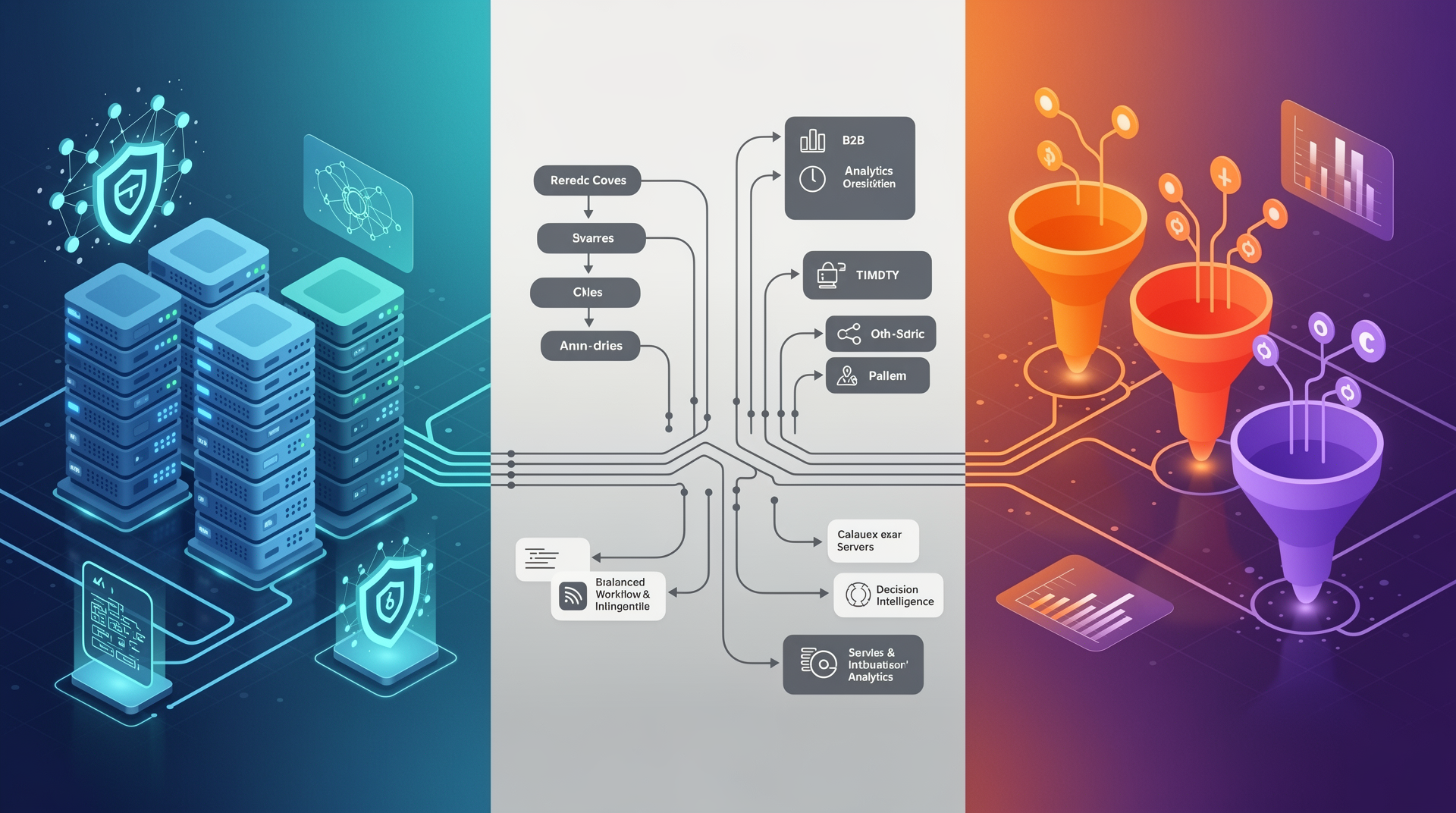
Last updated: 2026-05-31. In the current landscape of AI-enabled operations, the urgency to deploy automation often creates unsustainable technical debt. Experienced operations leads consistently report in industry surveys that rushing to deploy multiple AI agents without a clear infrastructure foundation leads to a 40% higher failure rate in the first quarter of operation. This guide evaluates how to select the correct pilot project, identifying specific data hygiene deficits—such as poor CRM logging—that typically derail ROI before a model even reaches production.
Operational leaders often find themselves caught in the “shiny object” syndrome—attempting to implement sophisticated AI models across every department simultaneously. From an analytical perspective, this is a significant strategic error because it strips engineering teams of the focus required to fine-tune high-impact workflows. A primary drawback of this “full-coverage” approach is that teams lose the ability to isolate variables, making it impossible to determine if a performance dip is caused by poor prompt engineering or inadequate underlying data, as noted in recent organizational workflow audit data. In reality, the decision to prioritize customer support triage over AI lead scoring (or vice versa) is a calculated move to address the friction point most severely impacting churn or trapped pipeline revenue.
Determining whether to focus your AI resources on the front lines of customer support or the top of your sales funnel requires a deep analysis of your current data maturity, system constraints, and the specific bottlenecks stifling your growth. Comparing these two paths through the lens of institutional readiness reveals that support teams prioritize high-volume historical logs, while sales teams rely heavily on clean, cross-departmental CRM integration. A common oversight occurs when firms attempt to deploy lead scoring while their sales data is fragmented across multiple disparate tools, a state characterized by high noise-to-signal ratios that render even the most sophisticated models ineffective. By conducting a formal data audit before committing developers to either path, leaders can mitigate the risk of building on unstable ground.
The Operational Economics of Support Triage
Customer support triage is the process of using Large Language Models (LLMs) or specialized intent-classification agents to analyze incoming tickets, categorize them, sentiment-sort them, and route them to the appropriate agent or automated workflow.
When your organization reaches a state where the support team is constantly firefighting, and average response times (ART) begin to climb, human labor becomes the primary bottleneck. AI triage acts as a force multiplier here. It does not just prioritize; it summarizes, strips PII for compliance, and often surfaces relevant knowledge base articles to suggest a primary resolution path for human agents.
Key metrics for success in this domain include:
- Ticket Deflection Rate: The percentage of issues solved through automated responses or effective routing that prevents human intervention.
- First Response Time (FRT): A reduction in the time it takes for a customer to receive an initial acknowledgment or a relevant solution.
- CSAT Trends: Monitoring whether automated categorization improves the quality of the interaction by ensuring the right expertise handles the ticket immediately.
Support triage is the primary choice when your organization is already managing high volumes of tickets where the “cost-per-ticket” is eating into margins. If your support team is spending significant manual time tagging tickets, escalating urgent issues, or cleaning up data for reporting, the ROI of a triage agent is immediate and tangible.
The Operational ROI of AI Lead Scoring
AI-driven lead scoring shifts the focus from cost reduction to revenue acceleration. Unlike traditional rules-based scoring (which relies on static criteria like “job title = Manager” or “watched webinar”), AI lead scoring utilizes predictive modeling to analyze historical deal patterns, behavioral signals (intent data), and firmographic enrichment to prioritize leads most likely to convert.
The business case for lead scoring is tied directly to Sales Capacity. If your sales team is wasting time on low-intent or “bad fit” leads, the Cost of Customer Acquisition (CAC) balloons. AI lead scoring optimizes the funnel by ensuring that high-value opportunities are prioritized, effectively increasing revenue without necessarily increasing headcount.
Metrics for success here include:
- MQL to SQL Conversion Rate: The precision of your model in identifying hand-off-ready leads.
- Sales Cycle Velocity: How quickly leads move through the pipeline once they have been pre-qualified by the AI.
- Customer Acquisition Cost (CAC): The reduction in “wasted” sales activity over time.
Prioritize this if you have a massive lead inflow where your SDR/BDR teams are consistently overwhelmed. The risk is that if you lead-score without the sales team’s buy-in, the AI’s input will be ignored. Alignment between data scientists and sales leadership is non-negotiable here.
Comparative Analysis: Aligning Workflow with Business Goals
Deciding between these two paths requires an honest assessment of your operational maturity. The following table provides a high-level comparison to help you gauge resource allocation.
| Feature | Support Triage | Lead Scoring |
|---|---|---|
| Primary Goal | Operational Efficiency | Revenue Growth |
| Primary Risk | Incorrect Routing/Escalation | Misaligned Scoring/Sales friction |
| Data Maturity | Requires structured ticket history | Requires clean CRM/historical deal data |
| Implementation | Moderate (Integration with ticketing system) | High (Requires pipeline/deal data hygiene) |
| Feedback Loop | Agent feedback on resolution | Sales feedback on “won/lost” outcomes |
Contextual Note: You should never prioritize “sales efficiency” if it compromises the customer experience of your existing base. An AI-driven sales process that ignores post-purchase support issues is a recipe for churn. Always ensure that the data flow from support informs the lead scoring model, particularly regarding sentiment about the product.
Risk Profiles and Compliance Barriers
Both implementations face distinct, non-trivial risks that operations managers must address before code is deployed.
Support Triage Risks
The most significant danger in AI support triage is the “black box” routing error. If an AI miscategorizes a critical (e.g., security-related) issue as “low priority,” your SLA could be breached, and your reputation damaged. Furthermore, handling support data usually involves extracting PII from emails or live chats. Any triage agent that passes this data to a third-party LLM must have robust PII-redaction pipelines in place to remain GDPR or SOC2 compliant.
Lead Scoring Risks
Lead scoring risks are primarily driven by “model drift.” Markets change, and what defined a “high-quality lead” six months ago might be invalid today. If your lead scoring model is not retrained on recent win/loss data, it can lead to “model bias,” where the system perpetually favors certain demographics while ignoring emerging, profitable segments. Additionally, ensure that your enrichment vendors are compliant with regional data privacy laws, as you are essentially “buying” user data to score them.
Rollout Roadmap: The “Ops-First” Hybrid Approach
Operations professionals should avoid a “big bang” rollout. Regardless of which path you choose, follow this integration sequence to manage risk:
- Human-in-the-Loop Foundation: Regardless of whether you are scoring leads or triaging tickets, start with an “AI-Suggest, Human-Decide” model. The AI provides a recommendation (a lead score or a ticket category), but the human is the final authority.
- Telemetry and Logging: Build in granular logging from Day 1. You cannot improve what you cannot measure. Capture the AI’s output vs. the human’s final manual override.
- Data Sync Architecture: Ensure your CRM and ticketing systems share a unified customer identity. An AI lead scorer should know if a lead is also a frustrated, high-ticket-volume customer.
- Feedback Loops: Conduct weekly syncs between your Ops team and the end-users (Sales or Support). If the sales reps don’t trust the score, the tool is a failure, regardless of the model’s accuracy.
Final Checklist: Which One Should You Build First?
If you are still struggling to decide, use this simple heuristic:
- Build Support Triage First If: Your support backlog is increasing daily, your CSAT is trending downward, and your support team is experiencing high turnover due to repetitive, low-complexity tasks.
- Build Lead Scoring First If: Your lead volume has outgrown the capacity of your SDRs, your CAC is rising, and you have clear evidence that sales teams are spending more than 30% of their time on leads that never convert.
The most common mistake we see is trying to build both simultaneously without a dedicated Ops engineering resource. The result is two half-finished projects that provide no clear ROI. Focus on the bottleneck that, if removed, creates the most immediate “breathing room” for your team.
Frequently asked questions
Can I run both workflows simultaneously without increasing operational overhead? It is possible, but risky. Implementing both simultaneously often causes resource fragmentation; we recommend serializing them based on current business bottlenecks.
What are the minimum data requirements to move from rules-based routing to AI-driven triage or scoring? Triage requires at least six months of clean, labeled ticket history. Lead scoring requires a reliable CRM history of won/lost deals and consistent CRM usage by the sales team to feed the model.
How do I measure the ‘shadow cost’ of AI agent maintenance for support vs sales? Track the time your Ops team spends on monitoring model performance, adjusting prompts, and managing API costs. If maintenance exceeds 20% of your total operational time, you likely have a technical debt issue.
If I have a limited engineering budget, which gives a faster path to revenue protection? Support triage usually offers a faster path to cost-containment and churn protection because it targets the customer-facing issues that lead to immediate account loss.
Related articles
How useful was this article?
Can you briefly tell us what could be better?
Get AI updates?
One practical tip per week. No hype, only useful comparisons and workflow insights.